Epoxy vs
Polyaspartic.
The two most popular resin floor systems in the GTA, compared honestly. Durability, UV stability, cure time, and where each one wins.
Both are tough. One is faster.
Epoxy is the classic workhorse: thicker, more forgiving, and usually the better value for indoor spaces like garages and basements. Polyaspartic is a newer, rapid-cure technology that handles UV exposure better and lets you walk on the floor the same day.
For most GTA homeowners, a high-quality epoxy system with a polyaspartic topcoat gives the best of both worlds: the depth and durability of epoxy, plus the UV and scratch resistance of polyaspartic.
Head to head.
What actually matters.
Durability under real wear
Epoxy builds a thick, monolithic layer that absorbs impact and resists oil, gas, and salt. That makes it the default for garages and shops in Ontario where winters are hard on floors. Polyaspartic is even harder on the surface, so it resists fine scratches and abrasion better, a strong choice for showrooms and commercial spaces with constant foot traffic.
UV stability and yellowing
The biggest practical difference is sunlight. Standard epoxy can yellow or lose its gloss over time if it sits in direct sun. Polyaspartic is aliphatic, meaning it resists UV rays and keeps its colour. If your floor is outside, near a south-facing garage door, or in a pool area, polyaspartic is the safer long-term bet.
Cure time and downtime
Epoxy needs a full day before light use and up to three days before vehicles. Polyaspartic cures fast enough to be back in service the same day. For businesses that can't pause operations, polyaspartic's speed is a major advantage. For residential installs where time is less critical, epoxy's slower cure gives installers more room to perfect the finish.
Temperature and seasonality
Epoxy can be temperamental in cold weather. Polyaspartic cures in colder and wider temperature ranges, so it extends the installation season in the GTA, useful for late fall or early spring outdoor work.
Cost and value
Epoxy is generally cheaper per square foot and builds more thickness per coat. Polyaspartic costs more in material, but the faster cure can reduce labour days. For most indoor garages, a professional epoxy base with a polyaspartic clear topcoat balances cost and performance.
Which should you choose?
Choose Epoxy if…
- The space is indoors with limited direct sun.
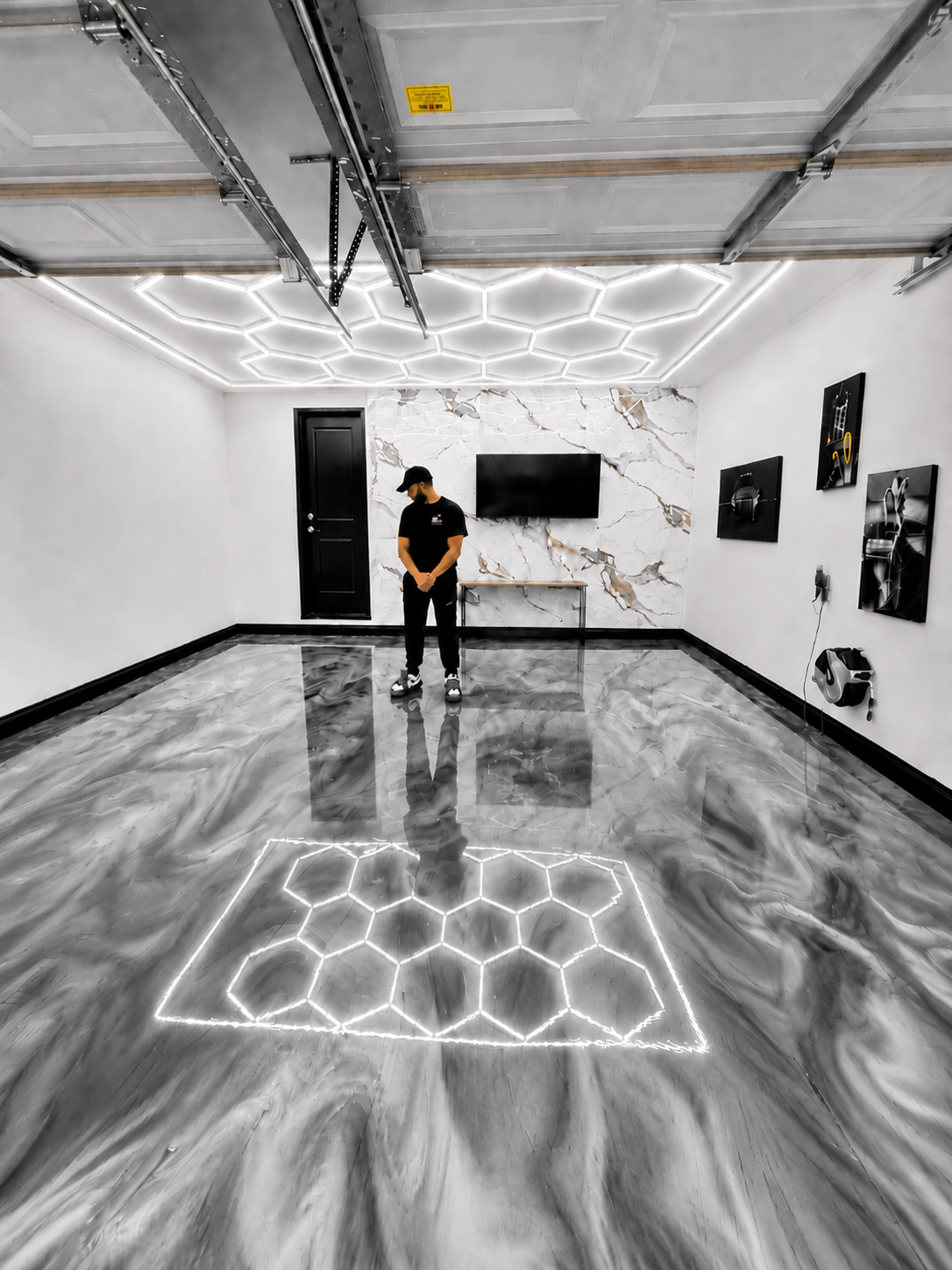
- You want the richest metallic or flake look.
- You want the most cost-effective professional system.
- The floor will see cars, tools, oil, and salt.
Choose Polyaspartic if…
- The area gets direct sunlight or is outdoors.
- You need the floor back in use within a day.
- Scratch and abrasion resistance are top priority.
- You're coating in cooler weather.
The ADZ EPOXY combo
For most projects we install a high-build epoxy base and colour system, then lock it in with a polyaspartic clear topcoat. You get the depth and impact resistance of epoxy, plus the UV stability and scratch hardness of polyaspartic, a hybrid system built for Ontario's climate and real daily use.
Still not sure? Let's talk.
Tell us about your space and we'll recommend the right system, epoxy, polyaspartic, or a hybrid built for your floor. We serve the GTA and all of Ontario.